
High-Performance Web Development, Speed & Custom Architecture
Most business websites crawl. They load slowly, break on mobile screens, and fail to turn search traffic into actual customers because they rely on bloated templates and poor architecture. High-performance web development fixes this bottleneck by combining clean code, lightning-fast rendering frameworks, and precision optimization.
Engineering for Speed: 100/100 Lighthouse & Core Web Vitals
Achieving a 100/100 Lighthouse score requires optimizing server response times, eliminating unnecessary plugin bloat, and utilizing modern rendering frameworks to ensure instantaneous page loads.
Performance is not a luxury. It is a direct ranking factor in Google Search Console and a primary driver of mobile conversion rates. When your Core Web Vitals pass with flying colors, search engines reward your domain with better crawl budgets and higher rankings.
Eliminating Bloat and Render-Blocking Assets
Standard templates load dozens of unused scripts, unoptimized CSS sheets, and massive image files that choke mobile browsers. We strip away unneeded code and replace heavy builders with lightweight, native components. Every asset is compressed into modern formats like WebP or AVIF, and scripts are deferred so the browser renders the visual above-the-fold content instantly.
Real-Time Performance and Analytics Monitoring (GSC & GA4)
Speed optimization is an ongoing discipline, not a one-time fix. We integrate Google Search Console (GSC) and Google Analytics 4 (GA4) right into your build stack. This tracking setup lets you monitor real-world user experiences, track organic impressions, and catch performance drops before they affect your bottom line.
Specialized Bilingual & RTL Arabic Web Design Solutions
Native Right-to-Left (RTL) architecture and bilingual routing ensure flawless typography and seamless navigation for Arabic-speaking audiences across the Gulf and North Africa.
Most web agencies build sites strictly for left-to-right English layouts. When Arabic content is forced into these templates, text alignments break, character glyphs disconnect, and translation widgets slow down performance.
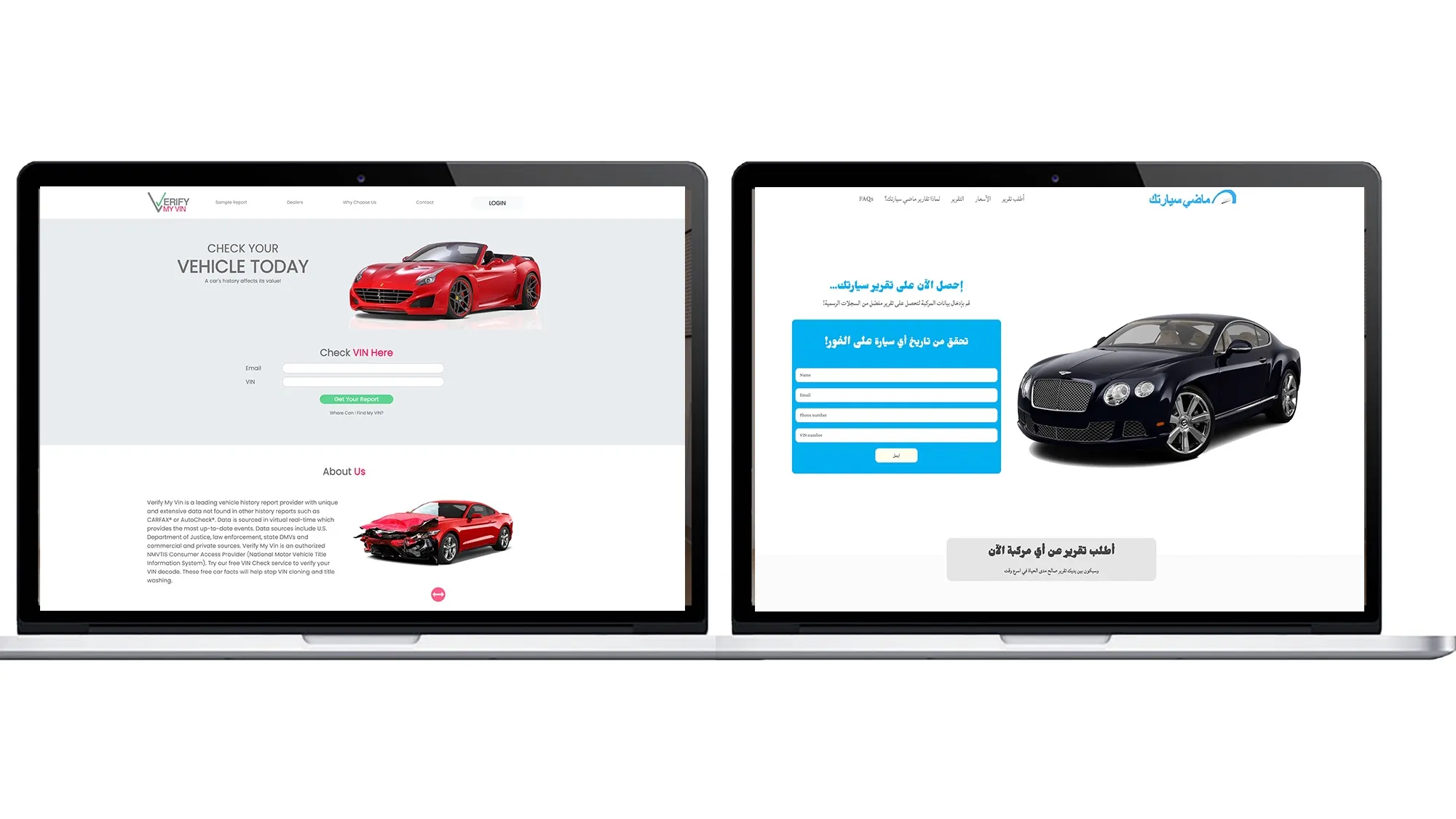
Example of custom bilingual and RTL Arabic web architecture with native localization and lightning-fast asset loading.
Native Right-to-Left (RTL) Layout & Typography Management
True RTL design requires more than just flipping a switch. We implement proper Unicode shaping and modern CSS logical properties (margin-inline, padding rules, and flexbox direction) so Arabic text renders natively across all mobile and desktop devices. Your typography stays crisp, readable, and professionally aligned without layout distortion.
Seamless Multi-Language Routing (AR/EN) for Global Audiences
Reaching international markets like Saudi Arabia, the UAE, and Egypt means providing a native language toggle that search engines can easily crawl. We build clean, localized URL routing structures (such as /ar/ and /en/) equipped with proper hreflang tags. This ensures international users land on the correct language version instantly while protecting your global SEO rankings.
Modern Stacks & Custom Technology Integration
Selecting the right technology stack depends entirely on your operational goals, balancing content management flexibility with extreme application speed.
Every business has unique requirements. We do not force you into a single rigid platform. Instead, we match your project to the optimal framework.
Modern CMS Architectures (WordPress & Advanced Custom Fields)
When your internal team needs to publish daily articles, manage products, or update service pages easily, WordPress remains a powerful tool. However, we build custom themes using Advanced Custom Fields (ACF) rather than heavy page builders. This gives you a clean content editing experience without the sluggish frontend bloat.
High-Speed Frameworks (Next.js & React)
For high-growth platforms, custom portals, and applications requiring instantaneous page transitions, Next.js and React provide unmatched performance. By leveraging static site generation and server-side rendering, Next.js delivers sub-second load times that keep engagement high and bounce rates exceptionally low.
AI Tooling & Automated Lead Capture Systems
Modern websites need to capture leads around the clock. We integrate intelligent AI tools—such as automated scheduling widgets, custom conversational receptionists, and instant quote calculators—directly into your site architecture. This ensures incoming traffic converts into qualified leads immediately, even outside of normal business hours.
Technology Stack Comparison
| Feature / Metric | WordPress (Custom ACF Build) | Next.js & React Framework |
|---|---|---|
| Primary Use Case | Content publishing, blogs, standard e-commerce. | High-performance apps, custom portals, elite speed. |
| Lighthouse Potential | 85 – 95 (With strict optimization) | 95 – 100 (Native clean architecture) |
| Content Editing | User-friendly dashboard for daily posting. | Developer-managed or headless CMS integration. |
| Security Profile | Requires active plugin and core updates. | Highly secure static/serverless rendering. |
Frequently Asked Questions
How do you guarantee a 100/100 Lighthouse performance score?
We optimize server response times, eliminate unnecessary plugin bloat, implement strict asset compression (WebP/AVIF), and utilize modern rendering frameworks to ensure instantaneous page loads.
Can you fix Arabic font-rendering and RTL layout issues?
Yes. We engineer native Right-to-Left (RTL) layouts with proper Unicode shaping and CSS logical properties to ensure flawless Arabic typography without character separation bugs.
Which platform or tech stack is best for my business?
We assess your specific goals—recommending WordPress for content-heavy publishing or WooCommerce shops, Next.js for maximum application speed, and custom integrations for AI tooling.
What makes Next.js faster than traditional website builders?
Next.js pre-renders pages into static HTML or optimizes them via server-side rendering, bypassing heavy database queries and slow runtime scripts that drag down drag-and-drop builders.